A farmer, a load bound for the Peace Country, and what the trade war really costs anyone with iron in the yard.
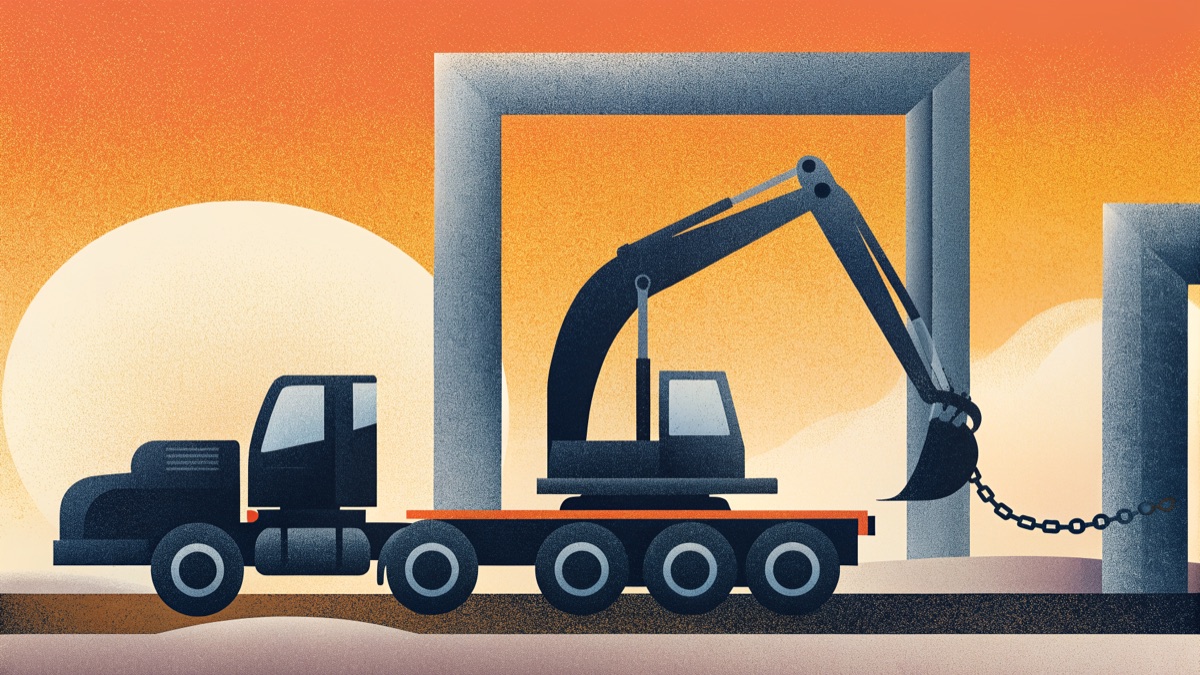
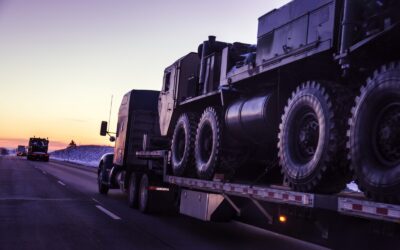
In the middle of August, an 8,000-pound load of farm equipment rolled north out of Oregon, headed for a farm colony near Grande Prairie. The over-the-road driver brought it as far as Edmonton. A local driver took the last leg, pickup at noon, delivery between five and six.
Somewhere in there, the buyer waiting on it called Trusted Dispatch. Not about the truck. About the duties.
He had heard 50%. Everybody had; it was the week Washington’s new tariffs on Canada hit the news, got postponed three days, then landed anyway. He had a load on the road while the two governments played chicken, and nobody could tell him what crossing was going to cost.
His load cleared. It landed by supper, on schedule, about CAD $4,000 (USD $2,900) all-in from Oregon to the Peace Country. But his question is the right question, and the answer he had heard was wrong. Most of what people are hearing about the border right now is wrong. So here it is straight: what the border really costs today, in both directions, what is on Ottawa’s list for September 8, and why next year matters more than this one. Every number is dated, checked, and linked at the bottom.
Straight up, before we start: we are Trusted Dispatch. We moved that load, and we make money when equipment moves. Read our numbers knowing that.
What does the border actually cost now?
Less than the news says. More than last year.
Those “50% tariff” headlines that had our buyer worried? They do not apply to heavy equipment, in either direction. Not dozers, not excavators, not a farm implement on a step-deck. We read the order, and so have the trade lawyers: machinery is not in it.
What did change is a rule from June, and it only bites going SOUTH. Any self-propelled machine entering the States (dozer, excavator, loader, grader, crane, forklift) now pays about 15% duty if it was built in Canada. Used or new makes no difference. There is no break for age.
Here is what 15% means in real money. This spring you could buy a used Cat 320 at an Alberta auction for USD $185,000 (CAD $256,000) and land it at a dealer in Montana for about USD $6,000 (CAD $8,300) in duty and fees. Today the duty alone is about USD $27,750 (CAD $38,500). Same machine. Same border. Five months later, crossing costs USD $22,000 (CAD $30,500) more.
Are the American buyers gone?
Mostly. And that changes what your iron is worth.
We hear it every week from the equipment resellers and auction yards we work with: their American customers have mostly stopped buying Canadian iron, not because the deals are gone, but because nobody can tell them what the duties will be. It is hurting businesses on both sides of the line.
The numbers back him up. For years the cheap loonie meant Americans could buy at Alberta auctions 15% to 30% under US prices, truck the iron south, and still come out ahead. Those buyers set the floor under every auction in the province. Run that play today and the 15% duty eats most of the discount, and freight eats the rest. The last time Ritchie Bros. published buyer numbers for its big Edmonton sale, 94% of the equipment stayed in Canada. They have stopped publishing that number since.
Here is the part people miss: prices held anyway. The record Grande Prairie sale in April (CAD $93.5 million, USD $68.7 million, about two and a half times last year) was mostly oilpatch outfits selling out, and Canadian buyers took nearly all of it at solid money. One D9 brought CAD $1.5 million (USD $1.1 million). The buyers are here now: mines, road builders, LNG work, county shops, colonies. Your market did not disappear. It moved home.
Why is it so expensive to move a machine right now?
Diesel, mostly.
You already know what the pumps say: about CAD $2.30 a litre here, up roughly 50% in a year. Down south, diesel hit USD $5.65 a gallon, which works out to about CAD $2.07 a litre, so it is the same squeeze on both sides of the line. And no, it is not the carbon tax. That is gone, and Ottawa cut the federal fuel tax in April on top of it. Taxes went down. Diesel went up anyway. The refineries cannot keep up, and the US government’s own forecast says no real relief before 2027.
Trucks cost more when fuel does. Flatbed rates in the States are up almost 40% in a year. Rates heading south out of Canada are up 26%. And for real heavy haul (permits, pilot cars, nine axles) there is no public price list at all. Broker guides put it at USD $3.50 to $6.00 (CAD $4.85 to $8.30) a loaded mile before permits. We publish our own booked-load numbers monthly in the Canadian Heavy Haul Rate Index, in CAD and USD.
So distance works like a second tariff now. A machine two provinces away costs real money before you ever turn a key.
What is on Ottawa’s list for September 8?
Canada hits back on September 8 with duties on US goods. A load out of Oregon is exactly the kind of deal this touches, so we read all 874 lines. Here is what they say.
The machines are fine. Dozers, excavators, loaders, graders built in the States are not on the list. No new duty coming north.
What is on it: forklifts at 15%. Tower cranes at 25%. Buckets and dozer blades at 15%. Mowers and farm equipment at 15% to 25%. And trailers (farm, logging, freight, semi-trailers) at 25%.
So a US dozer still crosses free. A US-built lowboy you are buying will not, and neither will the attachments in the deal. To be clear, this taxes the trailer as a purchase, not the carrier: a trailer doing the hauling is a conveyance under customs rules and crosses duty-free, same as always. But if you are buying a trailer or attachments from the States, close the deal and take delivery before September 8, or price the duty in. The bill goes to the buyer, not the driver.
Has a Canada-US tariff war happened before?
Yes. Almost exactly this one, 96 years ago.
In 1930, Washington passed the Smoot-Hawley Tariff Act, raising duties on more than 20,000 goods. It was sold as protection for American farmers. Canada hit back within weeks, putting matching duties on US products covering about 30% of everything America sold here. Retaliation spread, world trade fell by roughly two thirds over the next four years, and the farmers the tariffs were supposed to protect were hurt worst of all.
Here is the part that should get your attention: the legal power behind this August’s 50% tariffs is Section 338 of that same 1930 act. Washington reached back into Smoot-Hawley itself and used a clause that had sat dormant for 96 years. This is not a new game. It is the oldest play in the book, run again.
And tariffs outlive the fights that start them. In 1964, a spat with Europe over frozen chickens ended with America putting a 25% tariff on light trucks. The chicken fight is long forgotten. The truck tariff is still on the books six decades later, and it is a big part of why the pickups in your yard are built where they are built.
The lesson from both: plan on the rule, not the news cycle. The deal eventually comes back. The people who kept working through the noise, and knew their numbers, are the ones still standing when it does.
Should I sell now or hang on?
Depends which bet you want to make. Both are real. Here they are, straight.
Sell this fall: you are not selling into a dead room. The spring auctions proved Canadian buyers will take big packages at fair prices. If you are counting on American bidders coming back to bail you out, understand that is a bet on politics, and the politics got worse this month.
Hang on for next year: here is the case for waiting, and it is the biggest thing in this whole story. The big makers ate the tariffs this year instead of raising prices: Cat says about USD $2.2 billion (CAD $3.0 billion), Deere about USD $1.1 billion (CAD $1.5 billion). That ends. Deere’s money guy told analysts to expect “a bit of a step up” in their tariff bill next year, and Cat is already planning a price hike. Today’s equipment prices are on sale, and the sale ends in 2027. When new iron costs more, good used iron follows it up. A machine that cannot be shipped south cheap, sitting in a market with real work, does not drop. It climbs.
Buy this fall: flip it around. The Americans are not bidding against you, and the price jump is still ahead. This might be the cheap window. Just mind the September 8 list on anything crossing north.
The honest part
If less iron crosses the border, there is less border freight to haul. That is bad for carriers, ours included. The other side of it: machines are still moving. Oregon farm equipment to the Peace Country, oilpatch yards to mine sites, auction rows to county shops. Freight follows the iron wherever it goes.
Whatever you decide, price the freight before you bid, not after. On a heavy machine it is a five-figure line now. That is the part we do all day: a real estimate on a real machine, before you are committed.
That Oregon load made it to the farm between five and six, right when we said it would. The buyer gave the driver five stars. The border did not close. It got a toll, and on the wrong machine that toll is USD $22,000 (CAD $30,500). The people who know the price before they bid will be on the right side of every deal this fall.
Where these numbers come from
Every figure is as of August 25, 2026. The tariff rules come from the actual government orders. We read them, not the news about them. Currency conversions use the August 25 rate of about $1.39 CAD per USD, rounded. The Oregon haul is ours; we have kept the customer anonymous. Prices are marked CAD or USD throughout because our readers ship in both.
We also threw out every number we could not trace to a real source, including some widely repeated ones.
These rules have changed three times this year and can change again. If a number here goes stale, or you can show us one that is wrong, email us and we will fix it out in the open.
Sources
Government orders and lists
- US Section 338 tariffs on Canadian goods, USTR statement and line-level analysis showing machinery excluded (Global Trade Alert)
- June 2026 proclamation putting mobile equipment at about 15% (Federal Register 2026-11314) and the White House fact sheet
- Canada’s September 8 counter-tariff list, all 874 lines (Department of Finance)
- Proposed US tariffs on trailers, comment docket (Federal Register 2026-15961)
- Consumer carbon price removal (Finance Canada) and federal fuel tax suspension (PMO)
- Full US-Canada tariff timeline (Blakes)
Fuel and freight
- US diesel prices, weekly (EIA) and EIA Short-Term Energy Outlook
- US flatbed spot rates (DAT)
- Canadian and cross-border spot rates (ACT Research)
History
- Smoot-Hawley Tariff Act (Britannica) and economic history and trade-collapse figures (EH.net)
- Section 338 of the 1930 act revived against Canada (Axios, July 2026)
- The Chicken Tax: the 1964 truck tariff still in force (Hagerty)
Equipment market
- Ritchie Bros. Edmonton buyer-geography release and Q1 2026 market trends
- Grande Prairie record auction (Construction Equipment Guide)
- Used-equipment values and OEM tariff absorption (ENR / EquipmentWatch)
- Deere Q3 FY2026 earnings call transcript and Caterpillar Q2 2026 transcript